





Introduction — What Guides Don’t Tell You About Queues at Vienna’s Attractions
You’re in Vienna, rolling suitcase in tow, paper guidebook folded like a triangle, ready to photograph every baroque façade and Art Nouveau courtyard. Your instinct is to follow the well-oiled tourist trail. But the truth—the bit glossed over by brochures and curated Instagram feeds—is that queues at Vienna’s attractions are a small theater of micro-scams, bad information, and wasted patience. What the guides don’t tell you is that most queues are more than just waiting: they’re logistical traps, timing mistakes, and false promises of priority.
I’m speaking from experience. As a local who knows the city, I’ve tested museum corridors, palace ticket counters, and paid « skip-the-line » entrances that often deliver less than advertised. The locals’ golden rule: don’t hand over your time for a ticket until you’ve checked the real story. This survival guide reads like an urban detective file—clear, direct, and no-nonsense. Every trap here comes with a telltale sign so you can spot it and a simple tactic to avoid it. I explain not only where queues form (addresses, opening times, prices) but also how to read human clues—the posture of staff, a tiny « Gruppen » sign, or a line of noisy families—and how to rearrange your day to reclaim hours for Viennese cafés.
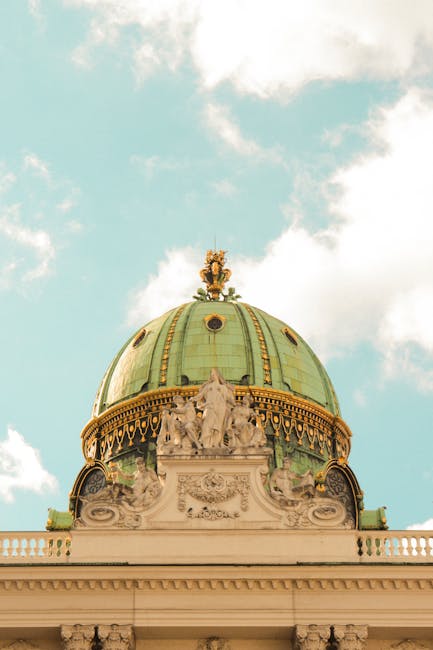
You’ll get practical tips: the real opening windows (sometimes different from online hours), the best time to visit Schönbrunn Palace (Schloss Schönbrunn, Schönbrunner Schloßstraße 47, 1130 Wien), and how to bypass the crowd outside the Hofburg (Michaelerkuppel/Heldenplatz, 1010 Wien). You’ll learn to spot classic traps, like « fast track » lines sold by corner agencies, and why (often) the best move is to arrive early or only buy online after checking the official sites.
This guide won’t promise magical shortcuts—Vienna still draws crowds for a reason—but it gives field-tested strategies: when to join a line, when to walk away, which tickets are worth the extra money and which are smoke and mirrors. You’ll walk away with exact opening times, euro prices current as of writing, immersive place descriptions, and above all, a mental map for navigating queues like a savvy local.
Trap 1 — The « skip-the-line » ticket sold outside: how to spot it and avoid it
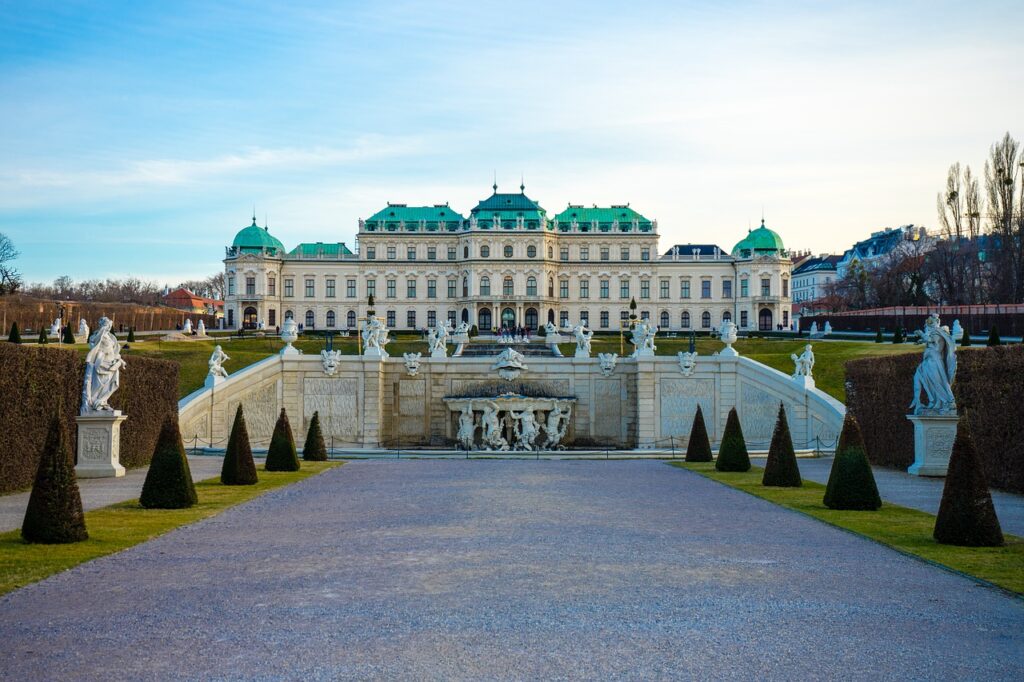
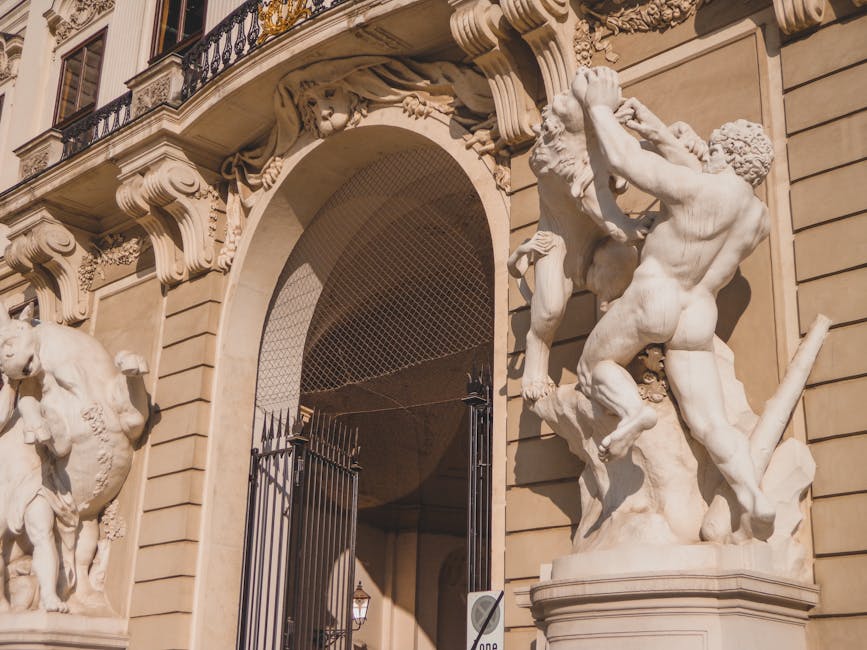
The promise: « No line, priority entry. » The reality: often an alternate queue, disguised waiting, and a surcharge that only buys you half an hour. The « skip-the-line » tickets sold outside by agents or unofficial kiosks are a classic trap. They flourish in front of attractions with many but poorly synchronized ticket windows—think the Hofburg (Sisi Museum & Imperial Apartments, Michaelerkuppel/Heldenplatz, 1010 Wien) or the Belvedere (Prinz-Eugen-Straße 27, 1030 Wien).
How to spot it:
- Unofficial seller: someone without an official badge, an improvised stand, shiny flyers. If it isn’t sold on the attraction’s official site or at its ticket counter, be suspicious.
- Vague promise: phrases like « priority entry » or « skip the line » without a specific time or reservation number. Genuine priority tickets have a locked-in entry time.
- Higher price than official: asking €5–15 more with no clear justification (transport, official guide, audio) is a red flag.
- Flimsy terms and conditions: no official confirmation email, no reservation number.
How to avoid it:
- Always buy from official sites: for example, for Schönbrunn, use the Schloss Schönbrunn official website (Schönbrunn Palace tickets: Grand Tour approx. €22.50; typically open 8:30–17:30 depending on season). Official tickets give you a clear time slot.
- Prefer ticket machines and official counters over makeshift street sellers. Machines issue timestamped, authentic tickets.
- If a ticket costs noticeably more than the official price (e.g., Sisi Museum + Imperial Apartments approx. €18.90), ask for an invoice and check the URL in the confirmation email.
- Local golden rule: compare before you buy. If an option is pricier, consider the real queue—often arriving 30 minutes earlier saves as much as a « priority » ticket.
Trap 2 — Illusory « off-peak » hours and misleading museum schedules
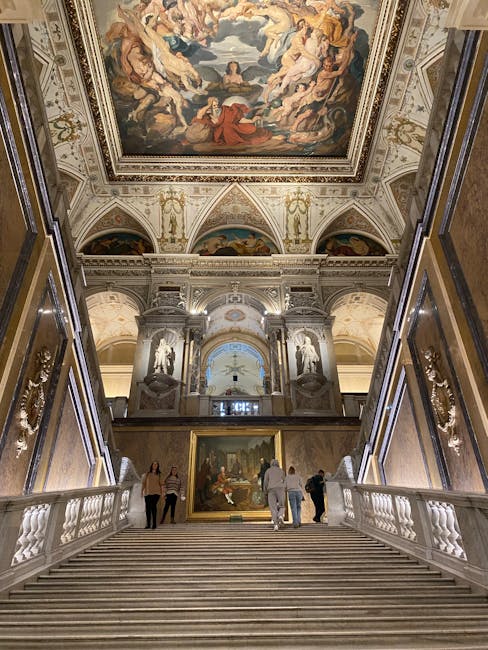
Guides often say: « come in the afternoon, it’s quieter. » What they don’t tell you is that « off-peak » varies by attraction and season. The trap: you rely on generic advice and end up in organized crowds (school groups, international tours, synchronized entry slots). Museums like the Kunsthistorisches Museum (Maria-Theresien-Platz, 1010 Wien) or the Belvedere have official opening hours, but visitor flow is driven by the logistics of guided tours.
How to spot it:
- Mass organized groups: if you see badges or flags held by guides, that’s rarely an « off-peak » moment.
- Separate entrances: a sudden flow from a school group or coach can change the whole timing logic.
- Online hours that don’t tell the full story: a site may say « open 10:00–18:00, » but galleries can close earlier for prep or private events—check daily notices.
How to avoid it:
- Favor opening time or the final hour: many locals follow the golden rule of visiting right at opening or just before closing—e.g., at the MuseumsQuartier (Museumsplatz 1, 1070 Wien), arrive at 10:00 or take the last slot 16:00–18:00 depending on the museum.
- Check closed days and late-night openings: the Belvedere (Upper Belvedere) sometimes stays open until 21:00 on Fridays; that can attract a different, sometimes less family-oriented crowd.
- Book timed-entry tickets: if a museum offers slots (e.g., Leopold Museum), pick a precise time—it’s restrictive, but removes uncertainty.
- Scan social media and TripAdvisor for recent reports: a morning influx of coaches flagged by others helps you avoid it.
Trap 3 — Downtown « multi-attraction » ticket booths: the line that eats your hours
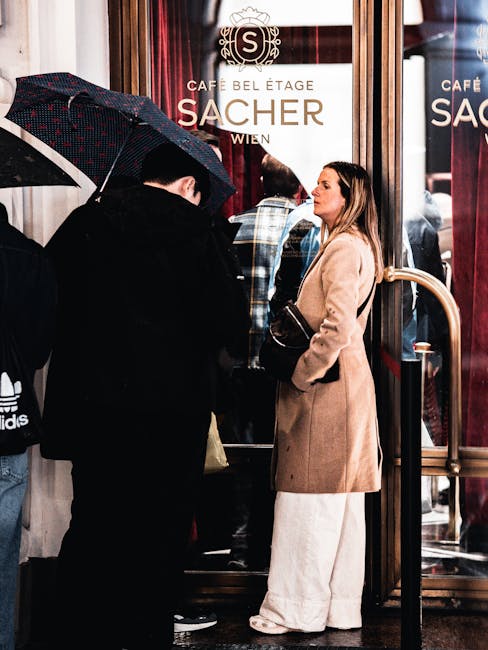
On Stephansplatz, Kärntner Straße or around the Ringstraße you’ll see booths selling combo tickets for several attractions—Opera, Sisi Museum, Schönbrunn, Riesenrad. The idea sounds tempting; in practice, these booths can create a single, time-devouring queue. The classic trap: you think you’re saving time with a combo, but waiting at the single counter costs you the one thing you can’t buy more of: visiting time.
How to spot it:
- A long line in front of a small stand on a pedestrian street (Kärntner Straße, Graben); sellers often have tablets, colorful brochures, and multiple customers at once.
- Claims of an « all-in-one tour »: lines like « everything included » or « multi-attraction » without listing separate time slots for each site. Combo tickets only work if you know each site’s individual schedule.
- Last-minute promo pressure: discounts if you buy now; often the saving doesn’t make up for the wait.
How to avoid it:
- Buy online in advance for each attraction separately. For example, the Wiener Staatsoper (Vienna State Opera, Opernring 2, 1010 Wien) offers guided tours around €9–11; buying directly from the opera avoids the generic tourist queue.
- If you insist on a combo, make sure it provides distinct, printable time slots. A combo without clear times often leads to frustrating misunderstandings.
- Local golden rule: divide and conquer. A ready-to-enter ticket is worth more than three attractions chained together with a queue at each step.
- For the Giant Ferris Wheel at the Prater (Riesenrad, Riesenradplatz 1, 1020 Wien), avoid buying on the forecourt if the line is over 15 minutes; standard tickets are about €12–13 and there’s often a ticket machine at the entrance.
Trap 4 — « Group » lines and guided tours that monopolize access
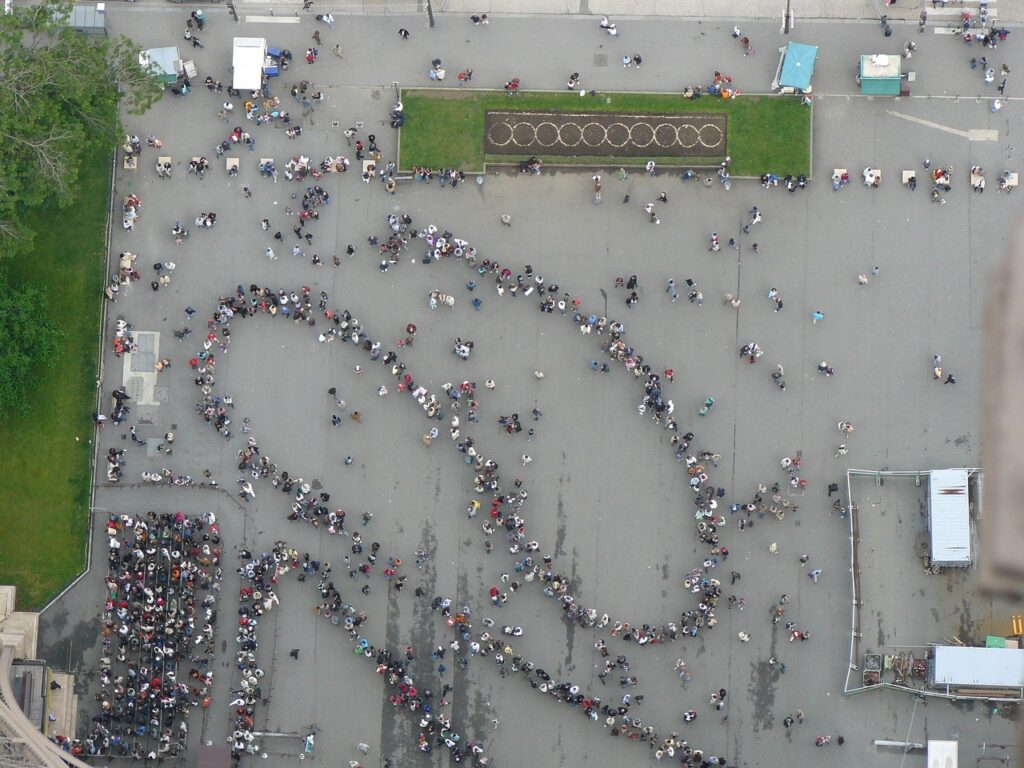
Guides sometimes recommend tours to « understand » the city. Partly true: tours are great for context, but they also create congestion. Major attractions route their visits around groups—separate entrances, bundled audio guides—and that blocks access for independent visitors. The trap: arrive without a booking at a time when three foreign groups are scheduled to enter together and you’ll be stuck outside or shuffled behind an organized crowd.
How to spot it:
- Flag-waving guides: an obvious sign—several groups with guides holding flags or using headsets arrive at regular intervals.
- Reserved doors: look for signs like « Group Entrance » or « Guided Tours »; it means the attraction runs dedicated slots.
- Sudden surges: what was a calm entrance turns into a tide the moment a coach arrives.
How to avoid it:
- Book your own guided tour if you absolutely want a guide—this way you become part of the flow and your time is scheduled. Official tours at the Wiener Staatsoper cost about €9–11; at the Hofburg, guided visits of the Imperial Apartments are often included in some combo tickets.
- If you prefer going solo, aim for times when groups are less likely to be scheduled: opening time or late afternoon. Locals’ golden rule: international groups often have mass departures between 10:30 and 14:00, so plan for 09:00 or after 15:30.
- Check the official group’s schedule: some institutions (like the Kunsthistorisches Museum) publish expected group bookings and occupancy.
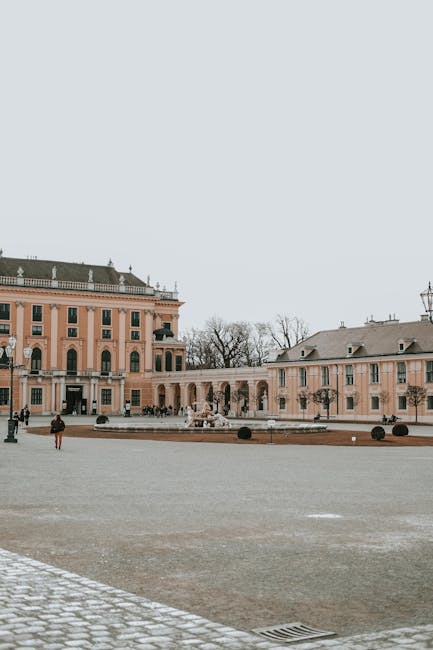
- Use alternate routes within the same venue: at Schönbrunn, the Imperial Apartments are highly sought-after; instead, prioritize the gardens and the Gloriette early in the morning to dodge the swell.
Trap 5 — Queues at « free » or low-cost attractions: the false economy
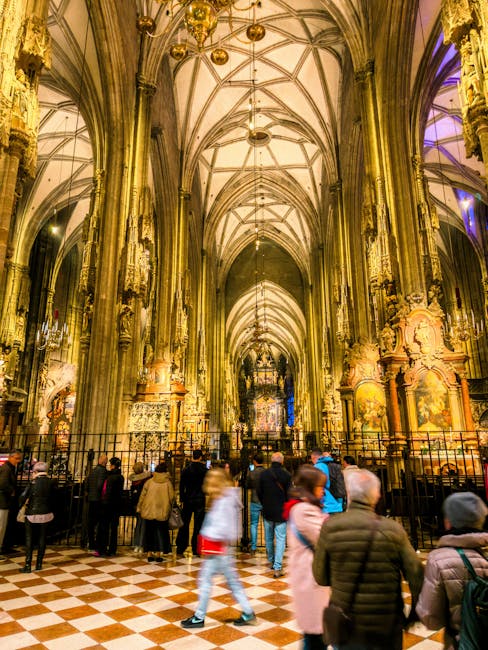
Free attractions draw both locals and tourists. The illusion: « it’s free, so I’ll just go. » The trap is that free access can create the worst queues, with no ticketing to regulate flow—think church concerts at Stephansdom (Stephansplatz 3, 1010 Wien) or the partially free climb to a viewpoint. You think you’re saving money, but you might lose half a day.
How to spot it:
- No ticketing: no controlled entry, just someone counting people or temporary barriers. Congestion isn’t regulated.
- One-off events: a special mass, street festival, or concert draws crowds—not always flagged in traditional guides.
- Local crowds: Viennese frequent certain free spots on weekends; a long local line is a clear sign.
How to avoid it:
- Schedule visits to free sites at odd hours: for example, visit Stephansdom early in the morning (or between services); the cathedral is generally open from 6:00 to 22:00, and the south tower climb costs about €6.
- Use paid alternatives that offer a better time experience: a paid entry to the Belvedere or Kunsthistorisches often avoids saturated free areas around monuments.
- Watch the local events calendar: the Vienna Tourist Office (Wien Info, Albertinaplatz 1, 1010 Wien) publishes an events calendar; a listed festival usually means queues everywhere.
Conclusion — Become a savvy local: the golden rule for saving time in Vienna
Vienna is a city of rituals and routines: cafés open late, operas at set times, palaces that welcome visitors at dawn. What guides don’t tell you is that the best strategy for avoiding queues isn’t a gadget but a mindset: plan precisely, prefer a fixed time slot over improvisation, and learn to read the signs of a queue that will cost you more than it’s worth. Locals’ golden rule is simple: don’t buy time in a panic. Trust reliable information—the attraction’s official site—and be flexible with time: sometimes going for a Wiener Melange for 30 minutes and coming back is the most economical choice.
Practical recap:
- For Schönbrunn (Schönbrunner Schloßstraße 47, 1130 Wien): buy the Grand Tour ticket (≈€22.50) on the official site and arrive at opening (usually 8:30) to avoid groups.
- For the Hofburg (Michaelerkuppel/Heldenplatz, 1010 Wien): Sisi Museum + Imperial Apartments ≈€18.90; avoid downtown booths and buy directly at the counter or online.
- For the Kunsthistorisches Museum (Maria-Theresien-Platz, 1010 Wien): ticket ≈€16; hours 10:00–18:00; aim for opening or late hours and check for groups.
- For the Wiener Staatsoper (Opernring 2, 1010 Wien): guided tour ≈€9–11; buy on the official site to avoid multi-attraction queues.
- For the Riesenrad at the Prater (Riesenradplatz 1, 1020 Wien): ticket ≈€12–13; avoid crowded forecourts, use the official ticket machines.
The classic trap to avoid is a decision made under pressure: the fast-talking seller, the tempting queue, and the illusion of immediate savings. The counter-strategy is methodical: verify real opening times (official sites and event pages), spot crowd indicators (groups, buses, « Group Entrance »), and build time buffers into your itinerary. Don’t forget local hacks: Vienna’s public transport (U-Bahn U1/U2/U4, trams) is reliable; a Vienna Card or a day transport pass (prices vary, roughly €8 for 24h depending on the offer) will save you time and money moving between sites.
In the end, Vienna isn’t a puzzle to be solved but a place to explore smartly. Be the detective: read the details, question sellers, check confirmation emails, and above all, guard your time the way a Viennese guards their afternoon treat. In a city where history sits on every corner, mastering queues gives you the freedom to truly enjoy the experience—more cafés, more walks through imperial gardens, and fewer minutes wasted behind a barrier.