





Introduction: Getting Sorted at Night in Vienna — Opening Hours, On-Call Pharmacies and Night Services
Vienna, Austria’s cultural and administrative capital, blends a lively night scene with a well-organised service network. Whether you live here, are expat or just passing through, knowing shop opening hours, how the on-call pharmacies (Apotheken-Notdienst) work, and what night-time emergency services are available can mean the difference between a calm night and a long wait. This comprehensive guide gives you practical, accurate, ready-to-use information: full addresses, typical opening windows, indicative prices and local tips to help you navigate Vienna’s night-time services.
Vienna runs a tightly structured on-call pharmacy system: some pharmacies rotate 24/7 duty, others stay open late on weekdays or weekends. The city also offers alternatives like urgent medical services, seasonal vaccination centres, and late-opening tourist information points for visitors. Below you’ll find curated lists of pharmacies in key districts — Innere Stadt (1st), Leopoldstadt (2nd), Landstraße (3rd), Favoriten (10th) and more — with precise addresses, typical hours, example prices for common items (paracetamol, plasters, basic thermometers), and descriptions so you can plan ahead.
Beyond practical listings, this guide explains how to check the on-call schedule (via mobile apps, local websites, or shop windows), how to present yourself to get prescription medicine outside normal hours, and who to contact in a real emergency (European emergency numbers, Austrian emergency services). You’ll find time-saving tips (for example, call the on-call pharmacy before you go to check stock), night-safety advice (well-lit routes, night public transport), and travel recommendations: which health app to have, documents to bring, and language alternatives in English or German.
This guide works well printed or on your phone: it includes visual cues for locations and realistic cost estimates to help budget a late-night pharmacy visit (e.g. a 20-tablet pack of paracetamol: around €3.50–€6.00; a basic digital thermometer: €8.00–€25.00; plasters and disinfectant: €2.50–€10.00 depending on brand). Finally, local recommendations will help you avoid common annoyances (long queues after 10pm, out-of-stock items) and point out alternatives — on-call GP clinics, hospital emergency departments, or private clinics open at night.
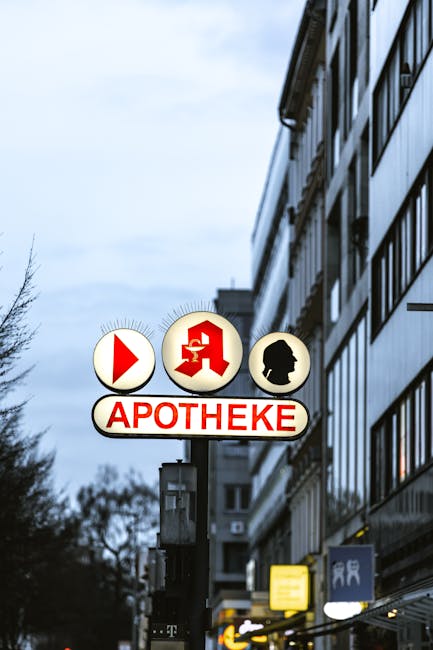
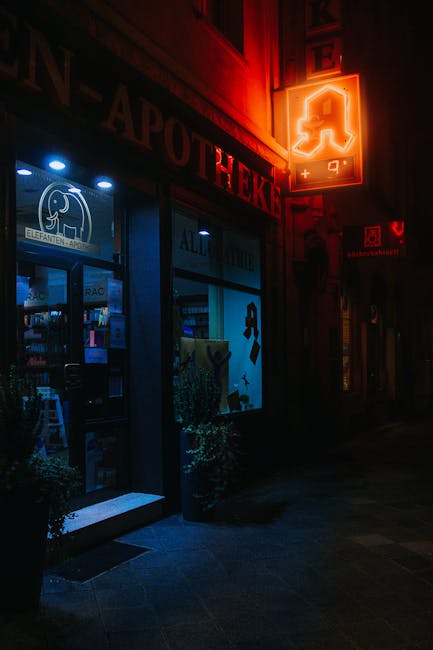
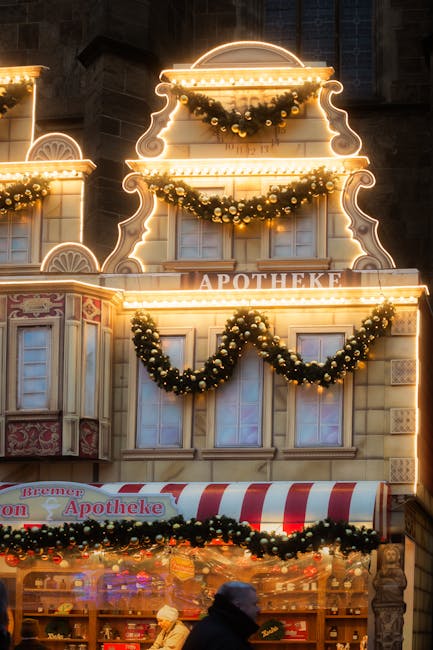
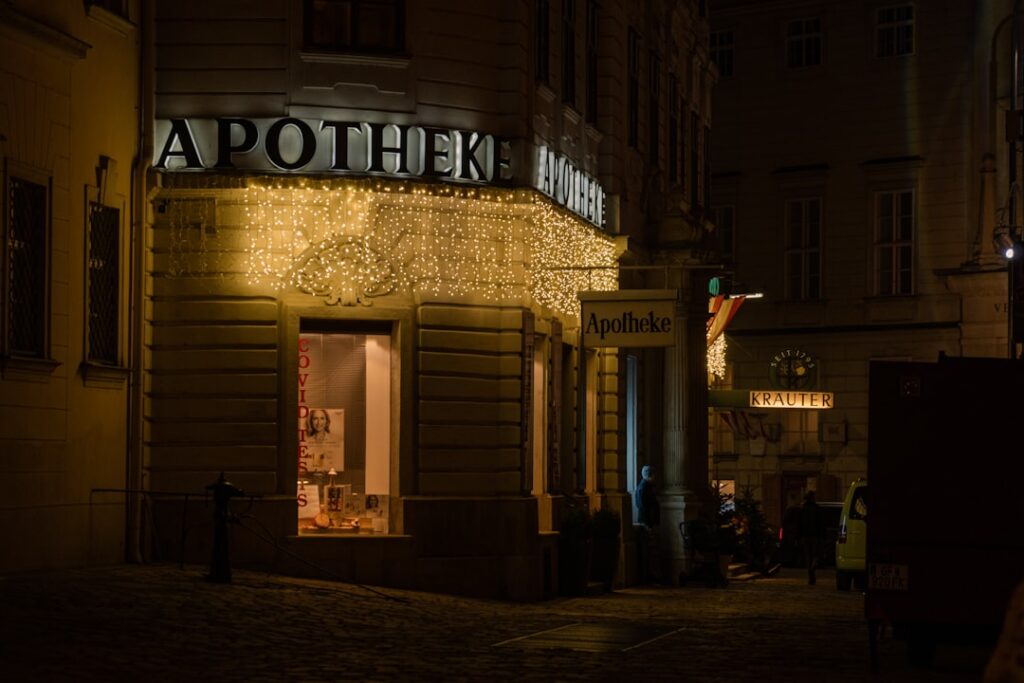
The document also includes visual markers to help you quickly spot the places mentioned. Suggested images illustrate visual landmarks (pharmacy facades, night-time shop windows, apothecary information boards, Vienna’s lit streets). Check the sections below for detailed neighbourhood- and service-specific information: opening hours, addresses, prices and practical tips for Vienna by night.
Main On-Call Pharmacies in Innere Stadt and the Historic Centre
The Innere Stadt (1st district) hosts many pharmacies for both residents and visitors. During the day most open early (usually around 08:00) and close between 18:00 and 20:00; on Saturdays often they close before midday; on Sundays many are shut except those displaying “Notdienst” (on-call). Here’s a selection of central pharmacies with addresses, typical hours and on-call info.
-
Graben Apotheke
Address: Graben 21, 1010 Wien
Typical opening hours: Mon–Fri 08:30–19:00, Sat 09:00–13:00. On-call duty: 24h when scheduled.
Indicative prices: Paracetamol 20 tablets €3.50; assorted plasters pack €4.50; basic digital thermometer €14.00–€22.00.
Description: Located on the famous pedestrian street Graben, Graben Apotheke is easy to spot with its beige facade and green sign. When on call it lights up a “Notdienst” sign and uses an intercom for collecting night-time prescriptions. Tip: call ahead if you have a special prescription — some preparations need time to be made. -
Am Hof Apotheke
Address: Am Hof 3, 1010 Wien
Typical opening hours: Mon–Fri 08:00–18:30, Sat 09:00–13:00. On-call rotation posted in the window for nights and Sundays.
Indicative prices: Cough syrup (250 ml) €5.50–€8.00; antiseptic cream 50 ml €3.00–€6.00.
Description: Just a stone’s throw from the Hofburg, Am Hof Apotheke offers services in English and product leaflets in English/German. Staff are used to tourist requests, which is handy if you’re not a German speaker. During on-call hours the main door is closed; you ring the bell and are served through a secure window. -
Universitäts-Apotheke Wien
Address: Universitätsring 1, 1010 Wien (near the University of Vienna)
Typical opening hours: Mon–Fri 08:00–18:00, Sat 09:00–13:00. On-call schedule varies; days listed on the municipal site.
Indicative prices: Topical analgesics €4.00–€10.00; nasal spray €3.50–€9.00.
Description: Close to university institutions, this pharmacy often provides medical leaflets and advice for international students. When on call a lighted sign and the official “Apothekennotdienst Wien” website show activation. Tip: if you’re a student or young traveller, ask for generics — they’re usually cheaper.
How to find the on-call pharmacy of the day:
- Official website: check the “Apothekennotdienst Wien” service (municipal page) which publishes the weekly rota and on-call pharmacies by district.
- Mobile apps: many local apps show the nearest on-call pharmacy in real time and indicate whether it offers 24/7 service.
- Window notices: pharmacies post the date and duration of their duty on their front (for example “Notdienst 18.–19. May”).
Night-time Services: Medical Emergencies, On-Call Clinics and Practical Advice
At night Vienna maintains a network of emergency units: hospital emergency departments (Notaufnahme), on-call medical centres (Ärztlicher Notdienst), and ambulance services. Knowing which service to call depending on the situation — life-threatening emergency versus needing a medicine — is crucial.
Important numbers:
- European emergency number: 112 (police, ambulance, fire)
- Ambulance in Austria: 144
- Polizei (police): 133
- Feuerwehr (fire): 122
Centres and on-call services:
-
Allgemeines Krankenhaus der Stadt Wien (AKH) – Notaufnahme
Address: Währinger Gürtel 18–20, 1090 Wien
Hours: 24/7 (full emergency service)
Indicative prices: Depending on treatment and insurance status: emergency consultation for uninsured people from around €50–€150 without extra tests; tests and procedures billed separately.
Description: The AKH university hospital is equipped for serious emergencies (trauma, acute illness). The waiting room fills up at night; call 144 if urgent transport is needed. -
Rettungsdienst and Notfallordinationen (on-call clinics)
Example: 24h Notfallordination – Ärztekammer Wien (local listings vary)
Hours: some units operate 24/7, others run shifted hours (e.g. 20:00–08:00).
Pricing: On-call outpatient clinic consultation for uninsured patients: €30–€80; costs rise if additional tests or injectable medications are required.
Tip: These clinics are suitable for non-life-threatening but urgent issues (high fever, wounds needing stitches, acute infections).
Practical night-time tips:
- Before heading to the on-call pharmacy, call or check online to confirm medication availability and avoid an unnecessary trip.
- If the situation is severe (chest pain, breathing trouble, loss of consciousness), dial 112 or 144 immediately — don’t wait for a pharmacy to open.
- Always carry a paper copy or a photo of your prescription, your European Health Insurance Card (EHIC) if applicable, and your ID; this speeds up care and billing.
- For tourists: some medicines that require a prescription in your home country may be available over the counter in Austria, or vice versa. Ask the pharmacist for the best local alternative and dosage.
Night Pharmacies and 24/7 Services: Where to Go When Time Is Critical
Several Viennese pharmacies take on rota duty and a few operate 24/7 according to monthly schedules posted. These places are key not only for meds but for first-aid advice. Here are pharmacies that frequently appear on night-duty rosters.
-
Hauptbahnhof Apotheke (Vienna Hauptbahnhof station)
Address: Europaplatz 2, 1100 Wien (inside Wien Hauptbahnhof central station)
Typical opening hours: Often open early and late; may cover 24h when scheduled.
Indicative prices: Standard painkillers €4.00–€7.00; sterile plasters €3.00–€8.00.
Description: Ideal for travellers arriving late or leaving early — the station pharmacy stocks a wide range, sometimes offers multilingual staff, and is easily accessible from the platforms. -
Favoriten Apotheke
Address: Favoritenstraße 100, 1100 Wien
Hours: Mon–Fri 08:00–19:00, Sat 08:00–12:00; night duty per municipal rota.
Indicative prices: Anti-inflammatory cream €6.00–€12.00; antiseptic spray €3.50–€7.50.
Description: Located in the 10th district, this pharmacy serves a large residential area and often appears on weekend on-call rotations. -
Landstraße Notdienst-Apotheke
Address: Landstraßer Hauptstraße 36, 1030 Wien
Hours: 08:00–19:00 weekdays; night duty on a rotating weekly schedule.
Indicative prices: Eye drops €4.50–€9.00; heat patches €2.00–€6.00.
Description: A good option for visitors staying near the Belvedere or Wien Mitte station. The pharmacy keeps a reserve of common emergency items and can direct you to an on-call doctor if needed.
Tips for using 24/7 services:
- Check the daily list of on-call pharmacies published by the municipality (wien.gv.at) to confirm whether a shop offers 24h service on the day you need it.
- Major stations (Wien Hauptbahnhof, Wien Mitte) and some hospitals have pharmacies open very early or late — convenient for travellers.
- Consider locations where a pharmacy and an on-call medical practice share a space: some facilities co-locate minor emergency care with an open pharmacy.
Local Pharmacies and Suburban Alternatives: Prices, Hours and Local Tips
Outside the centre, Vienna has a dense network of neighbourhood pharmacies that are handy for last-minute needs. They tend to have regular hours (opening from about 08:00, closing between 18:00 and 20:00) and scheduled night duties. Here are representative examples by district, with money-saving tips and how to adapt to local opening hours.
-
Brunnenmarkt Apotheke
Address: Ottakringer Straße 2, 1160 Wien (near Brunnenmarkt and Yppenplatz)
Hours: Mon–Fri 08:00–19:00, Sat 08:30–13:00; night duty on the monthly rota.
Indicative prices: Over-the-counter meds €2.50–€10.00; technical plasters €5.00–€12.00.
Tip: The surrounding market allows you to buy non-medical necessities if the pharmacy doesn’t stock a particular item (e.g. hot-water bottles). -
Meidling Apotheke
Address: Meidlinger Hauptstraße 45, 1120 Wien
Hours: Mon–Fri 08:30–18:30, Sat 09:00–13:00; on-call per rota.
Indicative prices: Cough syrup €6.00–€9.00; small-format vitamins €4.50–€15.00.
Description: Offering first-aid advice, this pharmacy is convenient for families and residents in southwest Vienna.
Local tips:
- Always carry a small basic first-aid kit (paracetamol, adhesive plasters, antiseptic) to avoid stepping out late for simple items — it saves time and money.
- Neighbourhood pharmacies can order a specific product for you within a day; ask if you can pick it up the next morning.
- If you’re in an area where pharmacies close early, identify the nearest on-call pharmacy when you arrive in the city — it prevents night-time panic.
Practical Steps, Costs and Administrative Requirements to Get Care or Medication at Night
Getting medication at night in Vienna sometimes involves administrative steps (presenting a prescription, proving insurance) and variable costs. Here’s a step-by-step guide to help you resolve things quickly and affordably.
1) First, check the nature of the need:
- Is it a life-threatening emergency? (call 112/144)
- Do you need a prescription medicine immediately? (see on-call pharmacy and, if needed, an on-call doctor)
- Do you need an over-the-counter product? (visit the nearest pharmacy or a medical supplies shop)
2) Documents to bring:
- Medical prescription (if required) — a paper photo often suffices.
- European Health Insurance Card (EHIC) for EU citizens, or private insurance proof; without insurance you pay on the spot.
- Identification (passport or ID card).
3) Indicative pricing:
- On-call doctor consultation: €30–€80 depending on the centre and if not covered by insurance.
- Over-the-counter medications: €2.50–€15.00 (painkillers, fever reducers, antiseptics).
- Prescription medicines: prices vary — often between €5 and €50 depending on ingredient and brand; generics are usually cheaper.
- Additional emergency tests (X-rays, blood tests): highly variable, billed separately (from €50 to several hundred euros).
4) Money- and time-saving tips:
- Ask for the generic version of a medication: same effectiveness, lower price.
- Check whether your insurance covers emergency expenses abroad: keep the assistance number handy for faster reimbursement.
- Call the on-call pharmacy before you leave to confirm stock and whether they can dispense a prescription immediately.
- Use local apps or the “Apothekennotdienst Wien” website to identify the nearest on-call pharmacy and its exact hours.
Conclusion: Planning for Nights in Vienna — Key Takeaways and Essential Recommendations
Living or travelling in Vienna at night becomes much less stressful when you understand pharmacy hours, how on-call services operate and what emergency options exist. In short: identify the nearest on-call pharmacy (or the central station pharmacy if you arrive late), keep emergency numbers handy (112, 144, 133, 122), and know that hospitals like AKH are open 24/7 for serious emergencies. Neighbourhood pharmacies will sort out everyday needs while station- and hospital-adjacent pharmacies are practical options for travellers.
Practical recommendations to remember:
- Always carry a copy of your prescription, your insurance card and ID — these speed up procedures and reduce language mix-ups.
- Before going out at night, call the on-call pharmacy to check medicine availability and avoid an unnecessary trip.
- Choose generics when possible to cut costs; Vienna’s pharmacists often recommend economical alternatives.
- If you’re a tourist, ask for leaflets in English or clear dosing instructions — most central pharmacies have English-speaking staff.
- In serious situations, don’t hesitate: call 112 or 144. Better to trigger an emergency transfer than to delay necessary care.
Ultimately, anticipation is your best ally: assemble a small night-time kit before heading out (paracetamol, plasters, antiseptic, basic thermometer), locate at least one 24h pharmacy or nearby on-call pharmacy close to where you’re staying, and get familiar with online resources (municipal site, local apps) that show live on-call schedules. Vienna combines robust public healthcare coverage with responsive private options: with the right info and a few precautions, your nights in Vienna can stay safe and well-prepared.